
Why Did My Trucking Insurance Go Up? Your Trucking Insurance Renewal, Explained
By Brett Dykes | 10 min read
Your renewal shows up and the number’s higher than last year. No claims, same trucks, same lanes, and the premium still went up. If you’re asking why your trucking insurance went up at renewal, you’re far from the only one this year.
Part of the answer is the market. Part of it is your own account. And part of it is how your trucking insurance renewal gets handled before it ever reaches your inbox. Here’s what’s driving renewal pricing in 2026, what underwriters actually look at, and what you can do in the 90 days before your policy renews.
KEY TAKEAWAYS
✓It’s not just you. Commercial auto premiums rose an average 4.5% in Q2 2026, and they’ve been climbing for years.
✓The insurance company’s underwriter sets your price based on your loss runs, safety record, drivers, units, and operation.
✓At MIG, a dedicated Renewal Team works your renewal. It isn’t squeezed in between new-business sales.
✓Start about 90 days out. More time means more room to prepare and review options.
✓Keep your USDOT and authority current in Motus so a renewal never turns into a lapse.
Why trucking insurance is going up almost everywhere
If your premium went up and nothing changed on your end, the market is a big reason. Commercial auto has been one of the toughest lines in insurance for years, and 2026 hasn’t been different.
Average commercial auto premium increase in Q2 2026, according to The Council of Insurance Agents & Brokers. If your renewal went up, you are far from alone.
The main driver is the cost of claims, especially lawsuits. Nuclear verdicts (jury awards over $10 million) reached 135 cases in 2024, totaling $31.3 billion. Trucking companies are a frequent target, and when large claims get more expensive, insurance companies spread that cost across everyone they insure, including clean, safe operations.
Per-mile numbers tell the same story. ATRI’s 2026 Operational Costs of Trucking study found liability insurance costs have risen six years in a row, reaching a record $0.106 per mile in 2025, up 49% since 2019, even as heavy-duty truck crash rates declined. Higher repair costs, equipment values, and medical bills all feed into it too.
WHAT ABOUT THE $750,000 FEDERAL MINIMUM?
Proposals to change federal insurance minimums come up from time to time. As of this writing, the FMCSA minimum for most for-hire general freight carriers is still $750,000, and most MIG clients carry $1,000,000 in auto liability. For the background, read why your FMCSA filing shows $750,000 when your policy says $1 million.
Let’s look at it before it’s due, not the week of.
MIG works with trucking businesses in 48 states, from one truck to large fleets.
What underwriters look at on your trucking insurance renewal
The market sets the tide. Your account decides where you land in it. At renewal, the insurance company’s underwriter re-rates your business using current information. These are the items that move the number most:
| What they review | Why it moves your price |
|---|---|
| Loss runs | Claims frequency and severity over the last 3 to 5 years. They need to be currently valued, even if you had no claims. |
| Safety record | CSA scores, inspections, out-of-service rates, and violations are read as a preview of future claims. Incorrect entries can be challenged with a DataQ. |
| Drivers | MVRs, CDL experience, and new hires. One driver with recent violations can change pricing for the whole policy. |
| Driver turnover | Insurance companies want drivers who know your company, routes, and trucks. Turning over drivers too often is a red flag for many underwriters. |
| Units and equipment | Number of power units and trailers, stated values for physical damage, and any trucks added or removed during the year. |
| Growth | Adding trucks or drivers quickly, or moving into new states or commodities, is a big unknown for an underwriter. Rapid growth can lead to a premium increase, and some insurance companies may decline to renew. |
| Your operation | Commodities, radius, states you run, mileage, and revenue. Changes since last year matter. |
| Time in business | Years under your current authority and a clean, active USDOT and MC record. |
| Your FMCSA record | The power units, drivers, and mileage on your FMCSA registration. Underwriters often compare them with what’s on your application. |
Two items catch a lot of owners off guard: growth and driver turnover. Fast growth can be great for your business, but to an underwriter it means new drivers, new equipment, and a track record that hasn’t caught up yet. And a revolving door of drivers tells an insurance company that the people behind the wheel may not know your trucks, routes, or safety expectations. Both can lead to a higher rate, or in some cases a market deciding not to renew.
Small changes add up. A new driver with a speeding ticket, a heavier commodity, or a few more states on your route can each move the rate, even with zero claims. If you’re not sure what’s on your current policy, our guide on how to read your trucking insurance policy is a good place to start.
Why a dedicated renewal team matters
Here’s something most truckers never think about: who is actually working your renewal?
At a lot of agencies, the producer who sold your policy also handles your renewal, while also bringing in new business. That’s a lot on one plate. In a month where a big new account is closing, a renewal can end up getting less attention than it deserves: one quote, sent close to the deadline, with little time to talk it through.
That isn’t a knock on anyone. It’s a structure problem, and MIG built a different structure.
MIG’s Renewal Team starts working your renewal about 90 days before your policy renews, so there’s time to review, ask questions, and make decisions without a deadline breathing down your neck.
What that means for you
■A team whose whole job is renewals. MIG has had a dedicated Renewal Team since 2017. It doesn’t split its time with new-business sales.
■Time to prepare. Starting early means time to review your account, gather what underwriters need, and look at options across the insurance companies MIG works with when it makes sense.
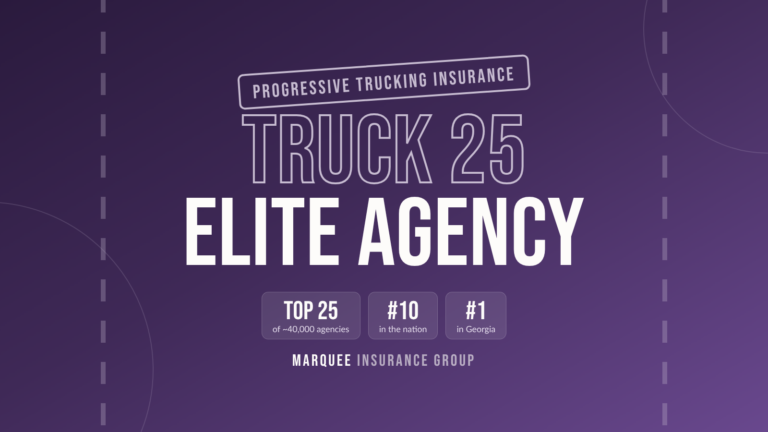
■Market access. MIG is a Progressive Truck 25 Elite agency and works with a wide range of national and specialty trucking insurance companies. Here’s what Truck 25 Elite means for you.
■Support beyond renewal day. A Renewal Marketing team presents accounts to underwriters, and MIG’s Operations team handles endorsements, driver and unit changes, and COIs throughout the year.
■Trucking only. The people working your account work on trucking accounts every day, and have since 2014.
GOOD TO KNOW
The insurance company, not MIG, sets your rate and makes the final underwriting decision. What a dedicated team changes is the time, preparation, and options that go into your renewal before that decision is made.
DEDICATED RENEWAL TEAM
Want a renewal team in your corner?
A team whose whole job is renewals, plus access to a wide range of trucking insurance companies. Talk to a MIG specialist about your next one.
How to prepare for your trucking insurance renewal
The best renewals start well before the renewal date. Here’s what to do in the months leading up to yours:
STEP 1
Respond to your renewal request early
You’ll get a renewal request before your policy renews. Send back what’s requested as soon as you can. Underwriters can’t quote without it, and late paperwork shrinks your options.
STEP 2
Get currently valued loss runs
Most insurance companies want loss runs valued within about 60 days of the effective date: usually 3 years, and 5 years for fleets. Some only release them to the named insured. Here’s why currently valued loss runs matter.
STEP 3
Clean up your safety record
Review your inspection and crash history. If something is wrong, file a DataQ well before renewal, since reviews take time.
GUARDRAIL, POWERED BY MARQUEE INSURANCE GROUP
See your safety record the way an underwriter will
Most owners don't see the violations behind a renewal increase until the renewal shows up. GuardRail reads your public FMCSA and roadside inspection records and shows which trucks and drivers are driving up costs, what to fix first, and when violations fall off. It's open to trucking companies whether or not they're MIG clients, and MIG clients get a discount.
STEP 4
Confirm your drivers and units
Make sure your driver and unit schedules are accurate. Trucks you’ve sold or turned in need a lease termination or bill of sale to come off auto liability.
STEP 5
Report every claim right away
Report every accident to your insurance company immediately, regardless of severity. Late-reported claims tend to cost more and look worse at renewal.
STEP 6
Check your FMCSA record in Motus
Make sure your authority is active and your power units, drivers, and mileage are current. More on that below.
Motus, federal filings, and keeping your authority active
Renewal is also a good time to make sure your federal registration is in good shape. FMCSA moved registration to its new system, Motus, in 2026, and many carriers have run into account lockouts, linking problems, and records that didn’t transfer cleanly.
Here’s why that matters at renewal. Your insurance company files proof of your auto liability coverage with FMCSA through a BMC-91X filing. If your renewal moves to a different insurance company, the new one files and the old filing comes off. A gap between the two, a name that doesn’t match, or an inactive USDOT record can put your authority at risk. Your MCS-90 endorsement rides on that same auto liability policy.
Do these now
■Claim your Motus account and make sure you can log in before you need to make a change.
■Match your details. Your legal name, DBA, address, and USDOT number should match your insurance policy exactly.
■Keep units, drivers, and mileage current. The power units, drivers, and annual miles on your FMCSA registration should reflect your operation today. Underwriters look at those numbers, and outdated ones can raise questions at renewal. We’ll dig into why in an upcoming article.
■Clean up access. Remove former employees, old vendors, and shared logins, and confirm the right company official is listed.
■Know your biennial update date. FMCSA has temporarily paused enforcement for updates due on or after June 1, 2026. The requirement still stands, and FMCSA says it will give advance notice before enforcement resumes. Read FMCSA’s notice.
■Watch for scams. FMCSA has warned about phishing sites pretending to be Motus. Only log in through FMCSA’s official website.
■Check after renewal. Once your new policy starts, confirm your insurance filing shows on your FMCSA record.
Frequently asked questions
Why did my trucking insurance go up if I had no claims?
Your rate reflects the overall market as well as your own account. Commercial auto premiums are still rising across the industry because of the cost of large claims and lawsuits, so even claim-free accounts can see increases. Changes like new drivers, more units, or new states can also affect pricing.
When should I start my trucking insurance renewal?
About 90 days before your effective date. That's when MIG's Renewal Team starts working renewals, and it leaves time to gather currently valued loss runs, review your account, and look at options.
Can MIG guarantee a lower renewal premium?
No. The insurance company sets the rate and makes the final underwriting decision. MIG's Renewal Team can review your account, help you prepare what underwriters need, and look at options across the insurance companies MIG works with.
Do I still need to do my FMCSA biennial update if enforcement is paused?
Yes. FMCSA paused enforcement and USDOT inactivations for biennial updates due on or after June 1, 2026 while it works through Motus issues, but the requirement has not been removed. FMCSA says it will give advance notice before enforcement resumes.
Talk to MIG about your next renewal
Already with MIG, or shopping a renewal that’s coming up? Our team is available Monday through Friday, 8 a.m. to 5 p.m. ET during normal business hours, and happy to help.
GET A QUOTE CALL (833) RING-MIG
This article is general information, not legal or coverage advice. Rates, coverage, and eligibility are determined by the insurance company and your policy terms. FMCSA rules and Motus processes can change, so check FMCSA for the latest.
Sources: Insurance Business, citing The Council of Insurance Agents & Brokers Q2 2026 report; ATRI 2026 Operational Costs of Trucking, as reported by A. Duie Pyle; FreightWaves, citing Marathon Strategies verdict data; FMCSA biennial update suspension notice.