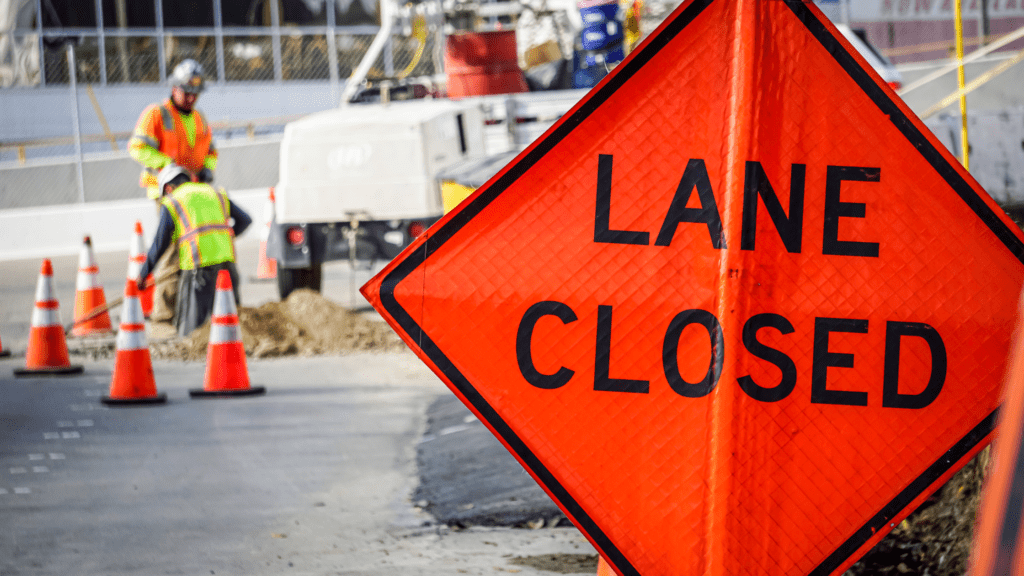
Spring and summer mark the start of construction season across the country, and with it comes a sharp rise in work zone activity on highways and local roads. Orange barrels, reduced speed limits, lane shifts, and flaggers are facts of life for millions of drivers. For too many, they are treated as inconveniences rather than serious hazards.
The data tells a sobering story. From 2019 to 2023, 4,470 people were killed in U.S. highway work zones, a figure that increased six percent over that period. In 2022 alone, the National Safety Council recorded 891 deaths and more than 37,700 injuries in work zone crashes. And despite what many assume, the majority of those victims were not the workers, they were the drivers and passengers passing through.
891
People killed in work zone crashes in 2022 (NSC)
37,701
Injuries reported in work zone crashes in 2022
2x
Fines in most states when workers are present
#1
Rear-end collisions — most common work zone crash type
This week is National Work Zone Awareness Week (April 20-24, 2026). An annual reminder that work zone safety is a shared responsibility between drivers, carriers, and the workers keeping our roads in shape. At Marquee Insurance Group, we work with fleets and individual drivers across the country, and we know firsthand how a single work zone incident can affect lives, records, and coverage. Here is what you need to know.
—
Why Work Zones Are So Dangerous
Work zones are uniquely hazardous because they combine multiple risk factors at once: reduced lane widths, sudden traffic pattern changes, unpredictable driver behavior, slow-moving equipment, and workers standing just feet from live traffic. For large trucks and commercial vehicles, the danger is compounded by longer stopping distances and limited maneuverability.
The leading cause: following too closely
Rear-end collisions are the most common type of work zone crash. Vehicles bunch up, traffic slows suddenly, and drivers who are following too closely or distracted gave nowhere to go. In a large truck traveling at highway speeds, the stopping distance alone can exceed 400 feet.
The three most common causes of work zone crashes are following too closely, speeding, and driver distractions. In Texas alone, there were more than 28,000 work zone crashes in 2025, resulting in 203 fatalities. That is not an anomaly. It is a pattern repeated in every high-traffic state in the country.
—
Essential Work Zone Safety Tips
Whether you are a commercial driver managing a route or a passenger vehicle driver on your morning commute, these habits apply every time you enter a work zone.
Slow down early
Watch for advance warning signs and begin reducing your speed before the work zone begins. At 60 mph, a sign reading “Road Work 1,500 Feet” gives you only 17 seconds to react.
Double your following distance
Leave at least twice your normal following distance. Rear-end collisions are the number-one crash type in work zones. Extra space gives you the time to react to sudden stops.
Put the phone down
Distraction is one of the top three causes of work zone crashes. No text, notification, or call is worth the risk. In many states, distracted driving in a work zone carriers elevated penalties.
Merge early and correctly
When a lane is closing, begin merging as soon as it is safe — do not race to the front and force your way in. Check mirrors and blind spots, and always use your turn signal.
Obey flaggers
A flagger’s directions override all other traffic signals. Treat them like a law enforcement officer. Refusing to obey a flagger is a criminal offense in several states.
Plan your route ahead
Use a map or traffic app before you leave. Knowing where active work zones are on your route lets you adjust timing or take detours, reducing exposure and stress on the road.
Stay buckled up
Seat belts remain one of the most effective protections in any crash. In Missouri, an unbuckled concrete truck driver was ejected and killed in a work zone collision that a belt may have survived.
Be patient
Tailgating, unsafe lane changes, and road rage are especially dangerous in a compressed work zone. Remember: the workers on the other side of those barriers are someone’s family.
—
Know the Law: Fines Are Doubled (and Then Some)
Nearly every state in the U.S. doubles fines for traffic violations committed in active work zones when workers are present. Some states go further with tiered fine structures, license suspensions, and even the possibility of jail time for repeat offenders. For CDL holders and commercial drivers, the stakes are even higher. A work zone conviction can affect employment and commercial driving privileges.
Beyond fines, a work zone speeding conviction can mean points on your driving record, increased insurance premiums, and serious jeopardy to your CDL. In Texas, Virginia, Tennessee, and Florida, repeat offenders can face license suspension. It pays, in every sense, to slow down.
—
A Quick Work Zone Checklist
- Reduce speed as soon as you see advance warning signs
- Increase following distance to at least double your normal gap
- Put your phone away completely, no hands-free exceptions in high-risk zones
- Turn on headlights, many states require this in active work zones
- Follow flagger instructions immediately and fully
- Watch for workers, equipment, and pedestrians near travel lanes
- Stay buckled for the entire duration of the work zone
- Do not change lanes unnecessarily inside a work zone
- Move over for any stopped vehicle with flashing lights, it is the law
—
What This Means for Your Fleet and Your Coverage
For fleet operators and owner-operators, work zone incidents carry consequences well beyond the scene of the crash. A preventable work zone collision can affect your CSA scores, trigger DOT scrutiny, raise your insurance premiums, and in the most serious cases, result in litigation. Protecting your drivers means building a safety culture that treats work zones with the same gravity as any other high-risk driving situation.
This includes pre-trip briefings when routes pass through known construction areas, driver training that specifically addresses work zone behavior, and telematics monitoring that flags speeding or hard braking events near active work zones. Small investments in awareness translate directly into fewer incidents, better safety records, and more competitive insurance rates.
At Marquee Insurance Group, we specialize in commercial transportation coverage and can help you assess how your fleet’s safety practices affect your risk profile. If you have questions about work zone incidents, CSA score impacts, or how to structure a safety program that keeps your drivers — and your premiums — in a better place, we are here to help.