
Physical Damage Insurance for Commercial Trucks: What It Covers and What It Doesn't
Your truck is your business. If it is damaged, broken down, or totaled, you are not just facing a repair bill. You are also facing lost income, missed loads, and the cost of getting back on the road. Physical damage insurance protects the truck itself. Here is what it covers, what it does not cover, and how to make sure you are not underinsured when it matters most.
The Gap Most Truckers Don't See Until It's Too Late
One of the most common misunderstandings in trucking insurance is the assumption that liability coverage protects your truck. It doesn't. Primary auto liability, bobtail insurance, and non-trucking liability are all designed to cover damage you cause to other people and their property. None of them pay a dollar toward repairing or replacing your own equipment.
As we covered in our guide on bobtail insurance vs. non-trucking liability, those policies are liability-only. When your truck hits something, gets hit by someone else, catches fire, or is stolen, your liability coverage does not address what happens to your rig. Physical damage insurance is the coverage that does.
For owner-operators and small fleets, the truck is the single largest asset in the business. Running it without physical damage coverage, or with coverage that is set up incorrectly, is one of the most expensive mistakes in trucking. A total loss on a truck worth $120,000 without physical damage coverage means the entire loss comes out of your pocket.
The Two Components of Physical Damage Coverage
Physical damage insurance is not a single coverage. It combines two coverages that are almost always sold together: collision and comprehensive. Understanding what each one covers is essential to knowing what you are actually buying.
Collision Coverage
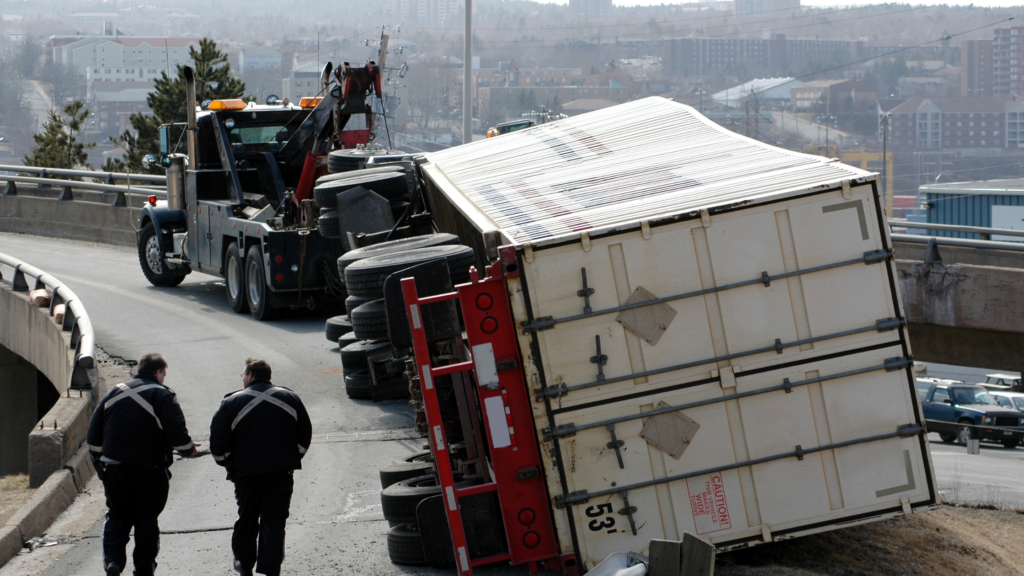
Collision coverage pays to repair or replace your truck when it is damaged through contact with another vehicle, an object, or the road itself. This includes rear-ending another vehicle, being hit by another driver, running off the road, jackknifing, or rolling over. It covers physical damage to your equipment regardless of who is at fault.
This is the coverage that pays when you have an accident. If the other driver is at fault and has insurance, their liability policy may ultimately cover your damage. Collision coverage can pay first, allowing your insurer to pursue the other party for reimbursement through subrogation. That means you are not left waiting for another insurer to settle before your truck gets repaired.
Comprehensive Coverage
Comprehensive coverage pays for damage to your truck from causes other than a collision. This includes fire, theft, vandalism, flood, hail, wind, falling objects, hitting an animal, and glass breakage. If your truck burns in a fire at a truck stop, gets stolen from a yard, or gets crushed by a falling tree, comprehensive is what pays.
Theft is a particular concern for commercial trucks in 2026. Cargo theft is up sharply nationwide, and trucks themselves are targets, especially late-model units with high resale value. Comprehensive coverage protects your investment against those non-accident losses.
What Physical Damage Actually Covers
When a covered loss occurs, physical damage insurance pays the actual cash value (ACV) or stated value of your truck, minus your deductible. In practice, that can include:
- Repair costs for covered damage, up to the truck's value
- Replacement cost in a total loss situation, up to your policy limits
- Towing costs in many policies — confirm this with your agent
- Glass repair or replacement under comprehensive
- Fire damage including engine fires
- Theft of the entire vehicle
- Weather-related damage including hail, flooding, and wind
What Physical Damage Does Not Cover
This is where many carriers get surprised at claim time. Physical damage coverage for your truck has significant exclusions that are easy to overlook when buying the policy.
- Your cargo — freight damage requires motor truck cargo insurance, a separate policy entirely
- Other people's vehicles or property — that is your liability coverage
- Mechanical breakdown or wear and tear — physical damage covers sudden losses, not gradual deterioration
- Trailers, unless specifically scheduled on the policy or covered by trailer interchange insurance
- Personal belongings inside the cab — these require a separate inland marine or personal property policy
- Downtime or lost income while your truck is being repaired — some policies offer a rental reimbursement endorsement, but base physical damage does not include lost revenue
Actual Cash Value vs. Stated Value — A Critical Difference
How your truck is valued in the policy determines how much you receive in a total loss. There are two common approaches, and the difference can amount to tens of thousands of dollars.
| Valuation Method | How It Works | What to Watch For |
|---|---|---|
| Actual Cash Value (ACV) | Pays the market value of your truck at the time of the loss, accounting for depreciation | A truck you bought for $130,000 three years ago may only pay out $85,000 at ACV — you absorb the gap |
| Stated Value | You and the insurer agree on the truck's value when the policy is written, and that's the maximum payout in a total loss | Make sure the stated value reflects current market prices — if trucks have appreciated since you set the value, you may be underinsured |
| Agreed Value | Less common; insurer pays the full agreed amount with no depreciation applied | Preferred for high-value equipment where depreciation disputes could be costly |
Used truck values have been improving in 2026, according to Ryder System CEO John Diez, who noted that conditions improved in Q2 2026 with further upside expected. That is good news if you are selling, but it can also mean ACV payouts lag actual market values on newer equipment. Make sure your stated value is current, not simply what you paid three years ago.
How Deductibles Work
Your deductible is the amount you pay out of pocket before your coverage kicks in. Physical damage deductibles for commercial trucks typically range from $1,000 to $5,000, though some policies go higher. The relationship between your deductible and your premium is direct: a higher deductible means a lower premium, and a lower deductible means a higher premium.
Choosing the right deductible depends on your cash reserves and loss history. A carrier with strong operating reserves and a low claims frequency may find a $2,500 or $5,000 deductible cost-effective because the premium savings over time can offset the higher out-of-pocket cost in a rare claim event. A newer operator with tighter cash flow may prefer a lower deductible to avoid a large unexpected expense.
As we covered in our guide on how trucking insurance rates are calculated, increasing your physical damage deductible from $1,000 to $2,500 can reduce that portion of your premium by up to 15%. It is a real lever, but only if you have the cash available to cover the deductible when you need to use it.
What Affects the Cost of Physical Damage Coverage
Physical damage premiums are calculated as a percentage of your truck's value — typically between 2% and 4% annually, depending on several factors. On a $120,000 truck, that is $2,400 to $4,800 per year for physical damage coverage alone.
The factors that move that rate include:
Truck Age and Value
Newer trucks with higher values cost more to insure for physical damage because the potential payout is larger. Older trucks with lower actual cash value may reach a point where the premium approaches the potential payout. At that stage, some operators choose to self-insure and drop the coverage. That can be a legitimate calculation, but make sure the math works before dropping coverage on a truck you depend on.
Driver History and MVR
Your driving record and the records of any drivers operating your equipment directly affect physical damage rates. At-fault accidents, serious violations, and DUI/DWI convictions all signal higher risk to underwriters and result in higher premiums. Annual MVR reviews for all drivers are both a regulatory requirement and a practical tool for keeping your insurance costs in check.
Garaging Location
Where your truck is garaged when not in use affects your comprehensive premium in particular. Trucks garaged in areas with higher theft rates, severe weather exposure, or dense traffic are priced accordingly. If you have moved your operation or changed where you park your equipment, make sure your policy reflects the current garaging address. Inaccurate garaging information can affect coverage at claim time.
Safety Technology
Dashcams, GPS tracking, and anti-theft systems increasingly factor into physical damage pricing. A truck with active GPS tracking is significantly easier to recover after theft, which reduces the insurer's expected payout. Many insurers pass some of that savings back through the premium. If you are running telematics, make sure your agent knows. It is a real discount lever that often gets missed when operators do not disclose it upfront.
Leased-On vs. Own Authority — Who Needs Physical Damage?
Both leased-on and own-authority operators need to think carefully about physical damage, but for slightly different reasons.
For leased-on owner-operators, your motor carrier's primary liability covers damage you cause to others, but their policy does not cover your tractor. Your equipment is your responsibility. Many lease agreements require you to carry physical damage coverage as a condition of the lease, and some carriers offer their own physical damage programs. If your motor carrier's physical damage program is available, compare it carefully against buying your own. Sometimes the carrier's program is competitive, and sometimes it is not.
For own-authority operators, physical damage is even more critical. You have no motor carrier to fall back on for coverage. Your truck, your trailer, and your freight are all your responsibilities. A total loss without physical damage coverage can end an independent operation permanently. The only safety net is the policy you buy.
Don't Confuse Physical Damage With Full Coverage
In personal auto insurance, "full coverage" typically means liability plus collision plus comprehensive. In commercial trucking, that framing does not hold. Physical damage on your truck covers the truck. It does not cover your cargo, your trailer unless it is scheduled, your liability to others, or your income while you are off the road. A complete commercial trucking insurance program requires multiple separate policies working together.
For a full picture of how all the pieces fit together, see our post on how trucking insurance rates are calculated, which breaks down every coverage type and how underwriters price each one. Understanding the full stack is the only way to make sure you do not have a gap that appears at the worst possible moment.
What to Check on Your Current Policy
- Verify your stated value is current — if truck values have moved since you last updated it, you may be underinsured
- Confirm whether your trailer is scheduled on the physical damage policy or if it requires separate coverage
- Check whether towing is included or requires an endorsement
- Ask about rental reimbursement or downtime coverage if being off the road for repairs would create a cash flow problem
- Make sure your garaging address is accurate — mismatches can create problems at claim time
- Review your deductible against your current cash reserves and adjust if your financial situation has changed
Want to make sure your physical damage coverage is set up correctly for your operation? The MIG team works with owner-operators and fleets to get the coverage stack right.
Talk to MIG